Marine Geoscience
The geology of the ocean and the coast — sediment, structure, and the climate record held in both. The smallest of the undergraduate science programs and the one with the most field time.
Marine Geoscience is about the solid part: the sediment on the seafloor, the structure beneath it, the shoreline that both produce, and the record of past climate held in the layering. It is the smallest of our undergraduate science programs, which means small classes and early access to equipment that at a larger institution would be reserved for graduate students.
Earth systems and introductory oceanography first, then sedimentology, coastal geomorphology, marine geophysics and paleoceanography. The sequence is deliberately arranged so that you learn to describe sediment before you learn to interpret it, which is the reverse of how most people would prefer to do it and produces better geologists.
The core laboratory holds the department's sediment cores, including a 2024 recovery from a basin off the shelf edge with a well-preserved section from the last interglacial. Undergraduates work on real core material, not teaching sets.
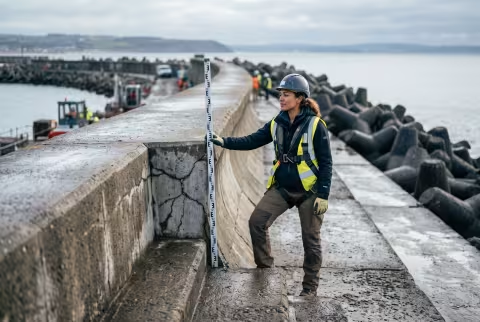
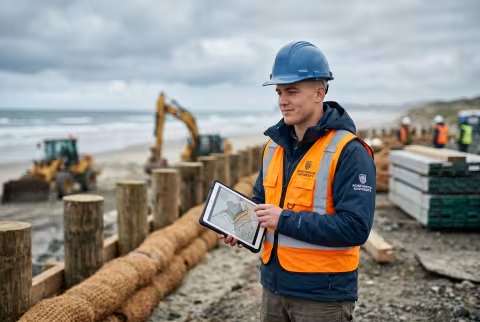
More than any other program here. Coastal geomorphology runs almost entirely outdoors, and geophysics takes students to sea aboard R/V Cascadia Strait to run survey lines and process the results themselves.
Geotechnical and survey work, offshore site characterization, coastal management, environmental consulting, and graduate study in geology, geophysics or paleoclimate. The offshore energy sector — including wind — hires heavily from this discipline and students are often surprised how directly the training transfers.
Weather, mud, and long days on a shoreline in conditions nobody would choose. There is a standing offer to any undergraduate willing to spend a semester describing core sections, which has never produced a queue.

Plate tectonics, the rock cycle, surface processes and deep time — the physical foundation the marine geoscience sequence builds on.
1The ocean as a physical, chemical, geological and biological system. Taken by students across every program here.
1Sediment production, transport and deposition, and the discipline of describing a deposit before interpreting it.
1How shorelines are built and taken apart: sediment budgets, littoral transport, and the response of a coast to changing supply and sea level.
1Seeing beneath the seafloor: seismic reflection, multibeam bathymetry, and sub-bottom profiling, with survey time at sea.
1.5Reconstructing past ocean states from sediment records, and deciding how much of a record is signal.
1Yes, for all students entering directly from high school. Transfer students are housed as space allows, and the waitlist usually clears by mid-July.
Accordion content - Officiis porta iusto luctus maecenas ultricies libero quisquam commodi do sequi facilisis, accusamus aut? Sapien dignissim nascetur nesciunt phasellus eros dis cupidatat tempor egestas cillum eveniet lobortis, sunt eos tellus atque quaerat, voluptatem exercitationem voluptatibus nesciunt, eveniet in dicta quae.
Associate Professor of Marine Geology